
 EN
EN
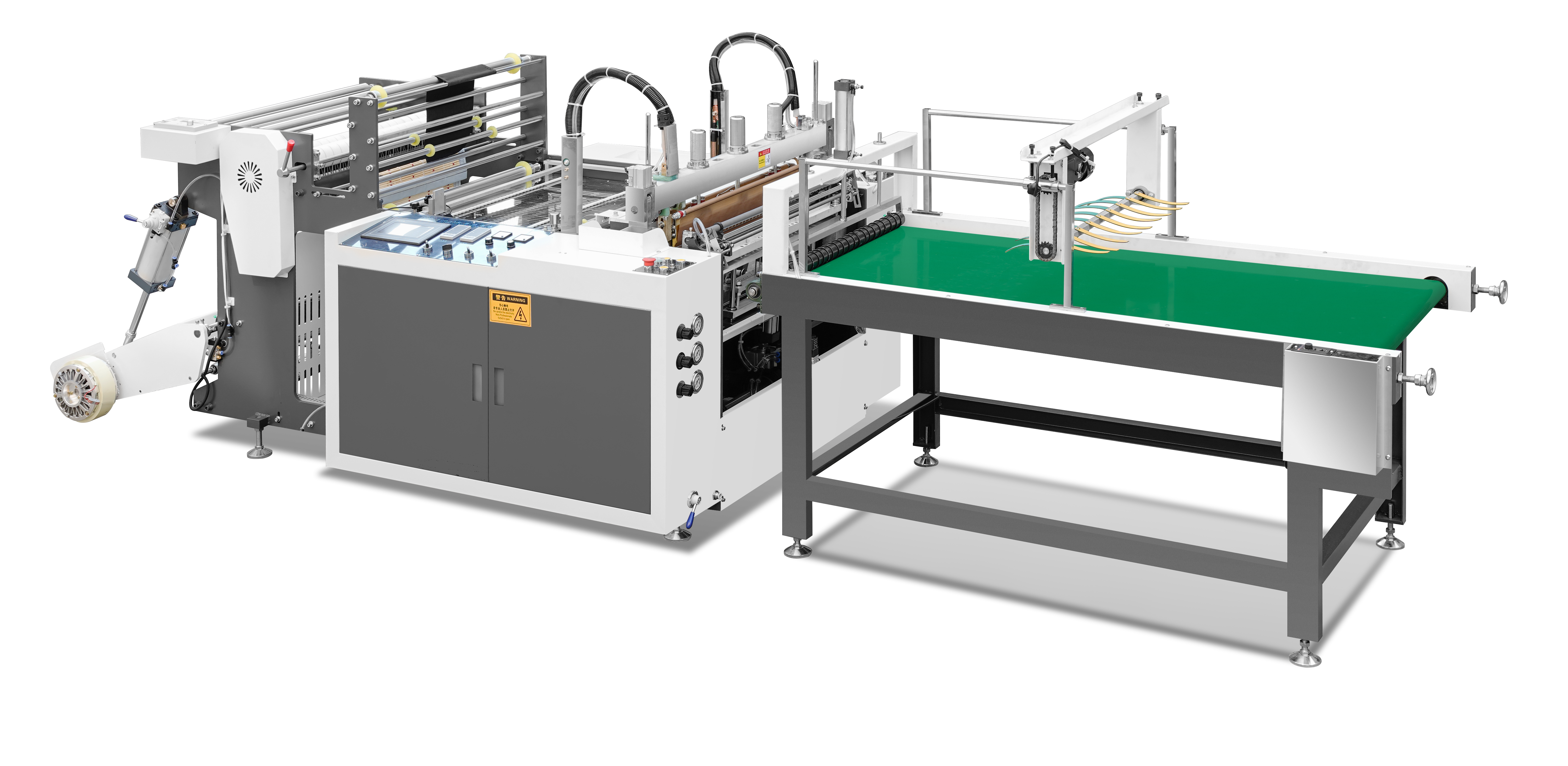
How a Bag Making Machine Works: Core Functional Modules
Unwinding Unit: Precision Feed Control for High-Speed Production
Production starts with the unwinding unit which holds those big rolls of raw film and feeds them into the main machine. These days, most machines come equipped with pretty smart tension control systems that keep everything flowing smoothly even when things get going fast over 200 meters per minute. Without this kind of control, we'd end up with all sorts of problems like wrinkled material, stretched sections, or worse yet, complete slippage that ruins the final product quality. What makes these systems really impressive is how they work alongside real time diameter sensors. When it's time to switch out a roll, these sensors detect the change and tweak the torque accordingly. This means operators don't have to stop everything manually for roll changes anymore. Machines can run almost nonstop throughout the day and night with very little hands on maintenance required.
Forming Section: Transforming Flat Film into Structured Bag Tubes
Flat polymer films get transformed into those three dimensional bag tubes we see everywhere these days. The folding plates create those handy side gussets that give bags extra capacity, and the forming shoulders basically shape how the whole thing looks when cut open. Getting everything lined up right is super important, which is why guide rollers work alongside optical alignment systems to keep positioning within about half a millimeter. This kind of precision makes all the difference for those multi layer laminates such as PET/AL/PE where wall thickness needs to stay consistent throughout. What's really neat is that manufacturers can switch between different bag styles from simple pillow pouches to those box bottom designs without having to change any tools at all, saving both time and money in production runs.
Sealing Unit: Dual-Station Heat Sealing for Hermetic Integrity
Dual thermal sealing stations work by applying controlled pressure along with heat between 120 and 200 degrees Celsius to make those air tight seams we need. The first station takes care of forming the bottom seal while the second one handles the top part once the product has been filled inside. These machines have really accurate temperature controls that maintain about plus or minus 2 degrees Celsius stability across all those sealing jaws. This helps ensure proper bonding even when dealing with materials as thick as 250 micrometers. When everything works right, this two step sealing method creates seals that are almost completely airtight, with validation showing over 99.5% effectiveness. Such good sealing performance means products stay fresh longer on store shelves and reduces risk of getting contaminated during storage.
Cutting Unit: Synchronized Trimming for Consistent Bag Dimensions
The cutting process for these sealed tubes relies on either rotary blades or ultrasonic cutters, which can produce individual bags with pretty impressive dimensional accuracy around ±0.3mm. When running at high speeds over 150 bags per minute, servo-driven systems keep everything synchronized so there's no dragging or misalignment issues. For quality control, we've got integrated vision systems watching every single unit as it moves through the line. These smart eyes catch any problems with seals or edges and automatically send those faulty pieces right out of the production stream. The system is also highly adaptable since operators can adjust parameters to handle bag lengths anywhere between 10 centimeters all the way up to 2 meters without needing to do any mechanical recalibrations. This flexibility helps maintain consistent results across different batches despite varying requirements.
Key Performance Metrics of an Industrial Bag Making Machine
Output Capacity, Uptime Reliability, and Maintenance Efficiency in 24/7 Operations
Industrial bag making machines must sustain peak performance under continuous production demands. Three interdependent metrics define operational excellence:
- Output Capacity: High-speed systems deliver thousands of bags per hour, with variable-speed drives adapting seamlessly to bag size and complexity.
- Uptime Reliability: Robust engineering enables 85% operational availability minimizing unplanned stoppages across 24/7 cycles.
- Maintenance Efficiency: Modular component design supports sub-30-minute changeovers, while predictive diagnostics analyze wear patterns to preempt failures before they occur.
Together, these factors drive Overall Equipment Effectiveness (OEE), where sustained performance above 85% reflects optimal resource utilization. Synchronized maintenance protocols reduce downtime by 40–60% versus reactive approaches, lowering cost-per-bag through reduced waste and labor overhead. Real-time monitoring empowers operators to balance throughput with sealing precision ensuring consistent quality over extended runs.
Material Compatibility and Thickness Range for Heavy-Duty Applications
Processing Multi-Layer Laminates (e.g., PET/AL/PE) up to 250 µm
Industrial-grade bag making machines reliably process demanding multi-layer laminates including PET/aluminum/PE composites up to 250 µm thick. This capability is essential for high-barrier applications requiring moisture, oxygen, and chemical resistance, such as:
- Pharmaceutical blister and sachet packaging
- Food-grade vacuum-sealed pouches
- Industrial chemical and agricultural sacks
Hardened sealing jaws, reinforced forming guides, and adaptive tension control ensure dimensional stability and seal integrity across diverse polymer combinations without sacrificing speed or yield.
Why Choose an Industrial-Grade Bag Making Machine for Your Packaging Line?
Bag making machines built for industrial use bring real efficiency gains to businesses producing large quantities. The automation saves companies around 40% on labor expenses while keeping production rates above 500 bags every minute, way faster than what manual workers or basic automated systems can manage. These machines are constructed with tough parts and engineered precisely so they run nonstop day after day, handling even thick 250 micrometer laminates without issues like failed seals or bags coming out inconsistent sizes. When compared to cheaper models on the market, unplanned stoppages decrease by roughly 70%, which translates into better overall equipment effectiveness for manufacturers looking to maximize their return on investment in machinery.
Getting close to zero waste happens when materials are handled and cut with precision, and having a modular setup means switching between different bag types becomes much faster. Manufacturers who want to grow their production lines see returns on investment jump dramatically compared to cheaper alternatives. Why? Because these systems eliminate bottlenecks, meet all necessary regulations including FDA standards, ISO 22000 requirements, and EU 10/2011 guidelines. Plus they save money over time. Looking at upgrades for packaging operations, industrial bag making equipment stands out as the best option for most businesses. These machines handle increased output demands, come ready for inspections, and just keep delivering value year after year despite the initial costs.
FAQ
What types of materials can an industrial bag making machine handle?
An industrial bag making machine can handle multi-layer laminates, including PET, aluminum, and PE composites, up to 250 µm thick. These materials are essential for high-barrier applications requiring moisture, oxygen, and chemical resistance.
How does a bag making machine improve production efficiency?
The machine's automation saves labor costs by around 40%, and its precision ensures minimal waste. Its high-speed production rate surpasses manual or basic automated systems, providing consistency and reliability in large quantity production settings.
Are these machines suitable for small or medium-sized enterprises?
While they can be a significant investment, industrial bag making machines are suitable for businesses aiming to scale up production. They provide long-term savings and efficiency gains by reducing downtime and waste and meeting regulatory standards.