
 EN
EN
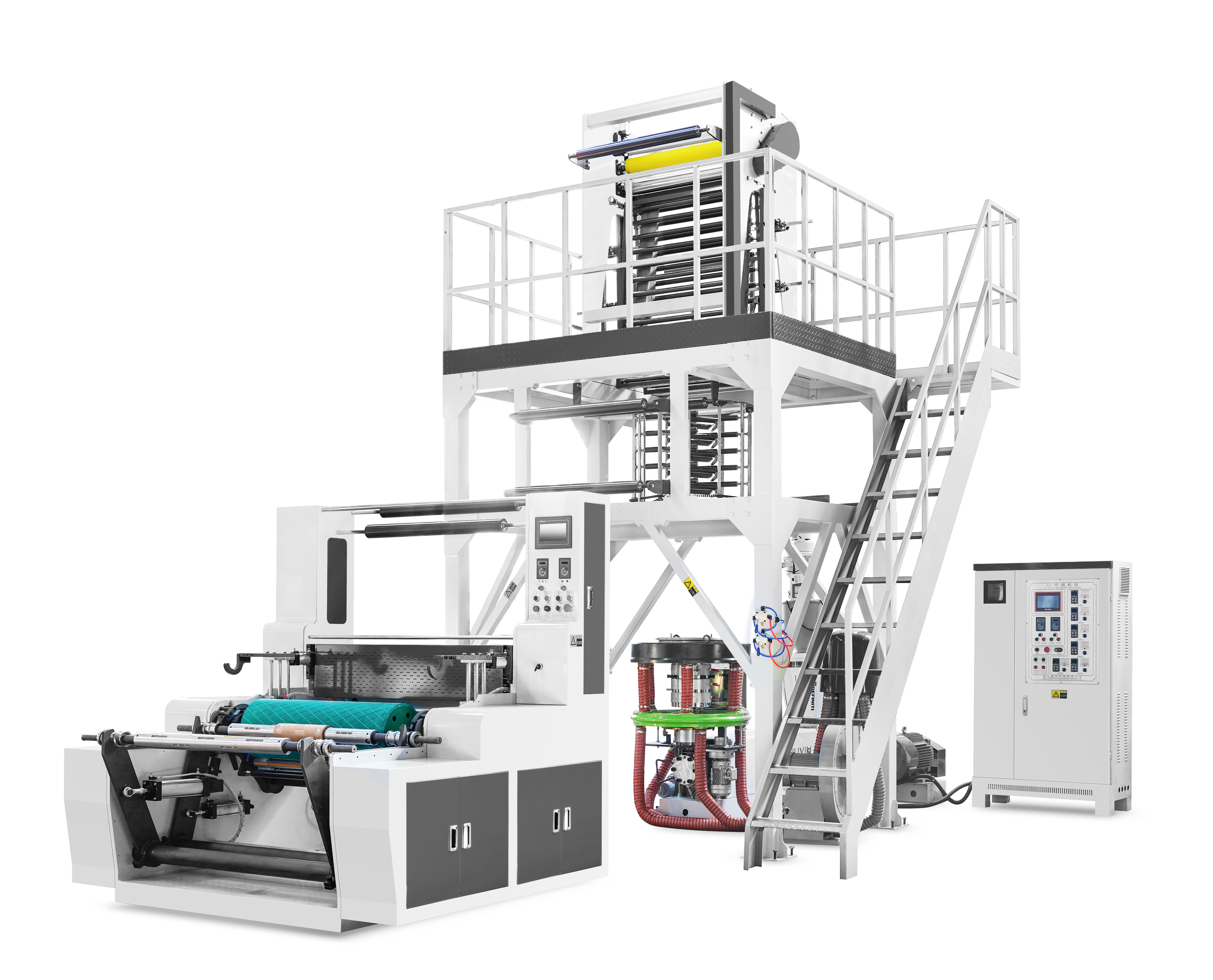
How Film Blowing Machines Achieve Optical Excellence
Blown film extrusion fundamentals for clarity and surface gloss
Film blowing machines take polymer resins and turn them into those clear, see-through films we all know from packaging. When the material melts uniformly, it gets rid of those pesky impurities that make light scatter around. At the same time, the machine blows air into the molten plastic, creating this stable bubble shape. This process stretches the molecules in two directions at once, which actually lines them up properly. The result? Less cloudiness inside the film and a much smoother surface. Premium quality packaging films can transmit more than 90% of light thanks to this process. Getting the melt temperature just right is super important too because if it's off, weird crystal formations show up in the film. And when cooling down, manufacturers need to hit those sweet spots between about 20 to 30 degrees Celsius per second. That keeps the surface roughness under control, ideally below half a micrometer Ra measurement, which makes sure the final product has that nice consistent shine everyone looks for.
Bubble stability, frost line control, and their direct impact on transparency
Getting consistent bubble geometry right matters a lot for how well something performs optically. When pressure stays steady within about plus or minus half a percent, we avoid those thickness changes that mess with how light passes through. There's this thing called the frost line, basically where the melted polymer starts turning solid, and it needs to stay somewhere between three to five times the size of the die above the actual die itself. If that frost line gets too high, we end up with too much crystal formation and cloudy spots appear. Keep it lower though, and we get more of that glass-like structure with better clarity. These fancy internal bubble cooling systems really help strike that sweet spot, bringing haze down below 5%, which makes all the difference for things like high quality display screens. The whole setup works because these synchronized take off mechanisms and collapsing frames keep everything stable as it moves along, stopping those annoying white marks from showing up when they wind it up later on.
Critical Hardware Design: Die and Air Ring Optimization in Film Blowing Machines
Precision-engineered die and air ring systems determine optical quality in plastic films. Their coordinated operation controls thickness consistency, surface smoothness, and crystallinityâfundamental to achieving high-gloss, low-haze outputs.
Oscillating vs. rotating dies: effects on gauge uniformity and surface finish
Oscillating dies work by moving back and forth in straight lines, which helps spread out the polymer flow evenly across the die lip area. This reduces variations in thickness and minimizes those pesky directional flow lines that can ruin product quality. Rotating dies take things further with their constant circular movement pattern. These actually get rid of melt fractures completely and wipe away all those surface imperfections caused by regular flow patterns. The result? A much smoother finish that's essential for products where optical clarity matters most. Of course there's a catch though. Rotating systems need better seals since they spin continuously, making them a bit more complicated to maintain. For companies focused on mass production rather than crystal clear results, oscillating dies still hold their ground as the go to option when average transparency is good enough for what needs to be made.
Air ring configurations and internal bubble cooling for crystallinity and gloss control
The dual lip air ring system provides even, fast moving external cooling that keeps the bubble stable while preventing those big crystals from forming, which cuts down on haze. When paired with IBC systems that blow cold air through the inside of the bubble, heat moves away from both sides much quicker. These two working together cut crystal growth by somewhere between 15 and 30 percent over traditional single lip systems, making products look shinier overall. Polypropylene materials really benefit from this setup since they need cooling about 25 percent faster than polyethylene does to stay clear and free of cloudiness. Modern equipment now has features that adjust airflow automatically during production runs, so operators don't have to constantly check and tweak settings just to maintain consistent appearance throughout entire batches.
| Cooling System | Primary Function | Optical Benefit | Material Consideration |
|---|---|---|---|
| Dual-Lip Air Ring | External bubble stabilization | Haze reduction (±5%) | Higher airflow needed for crystalline polymers |
| IBC | Internal surface quenching | Gloss enhancement | Mandatory for films >30 μm thick |
Polymer Selection and Process Tuning for Defect-Free Glossy Films
PP, PE, PET, EVOH, and EVA: optical performance comparison in film blowing machines
The material selected ultimately determines what kind of optical performance can be achieved. Take polyethylene for instance it gives nice surface shine but clarity remains somewhat limited because of its crystalline nature. Low density PE typically reaches around 85-90% clarity whereas high density versions drop down to about 70-80%. When polypropylene gets cooled quickly and evenly across its surface, it actually beats out PE in terms of transparency while still keeping good structural rigidity. PET plastic stands out for its brilliant appearance and maintains shape well over time, though manufacturers need to work within very tight temperature ranges to prevent cloudiness or breakdown during processing. For those needing clear barrier layers in packaging, EVOH works wonders, and EVA is great for creating smooth surfaces needed in stretch films. What we see across different materials is that reducing crystallinity helps cut down on haze formation which means getting process parameters right matters just as much as picking the right base resin for production runs.
Temperature profiling, winding tension, and cooling rateâbalancing gloss against haze and stress whitening
Getting that flawless glossy finish requires careful attention to both heat and mechanical factors throughout the process. When temperature changes happen too quickly between the die and frost line, we end up with those annoying crystal formations and cloudy spots on the product. For most polymers, keeping melt temps within about 5 degrees Celsius of their ideal range is pretty critical. Cooling things down fast gives us better shine, but watch out for stress whitening issues, especially when working with polyolefins at cooling rates over 50 degrees per second. On the flip side, slower cooling does reduce haze problems but can mess with how stable the dimensions remain. Keeping winding tension under 2.5 Newtons per square millimeter helps avoid surface deformations while still maintaining good layflat properties and consistent optical quality across the material. These days, film blowing equipment equipped with intelligent blow control systems and properly adjusted tension settings can consistently deliver products with gloss ratings above 90 GU and haze levels below 5%, all without those pesky microcracks or whitening defects that plague lesser setups.
FAQ
What are the main factors affecting optical quality in film blowing machines?
The main factors affecting optical quality include the uniform melting of polymer resins, the stability of the bubble geometry, the control of the frost line, and the design of die and air ring systems. These elements influence the clarity, surface smoothness, and crystallinity of the films.
How does cooling rate affect film quality?
Cooling rate is crucial in determining film quality. Faster cooling rates improve surface gloss by minimizing crystal formations, but can lead to stress whitening issues, particularly in polyolefins. Conversely, slower cooling can reduce haze but potentially compromise dimensional stability.
What is the role of oscillating and rotating dies in film blowing machines?
Oscillating dies help distribute polymer flow evenly, reducing variations in thickness and directional flow lines. Rotating dies provide a smoother finish by eliminating melt fractures and surface imperfections, crucial for achieving optimal optical clarity.