
 EN
EN
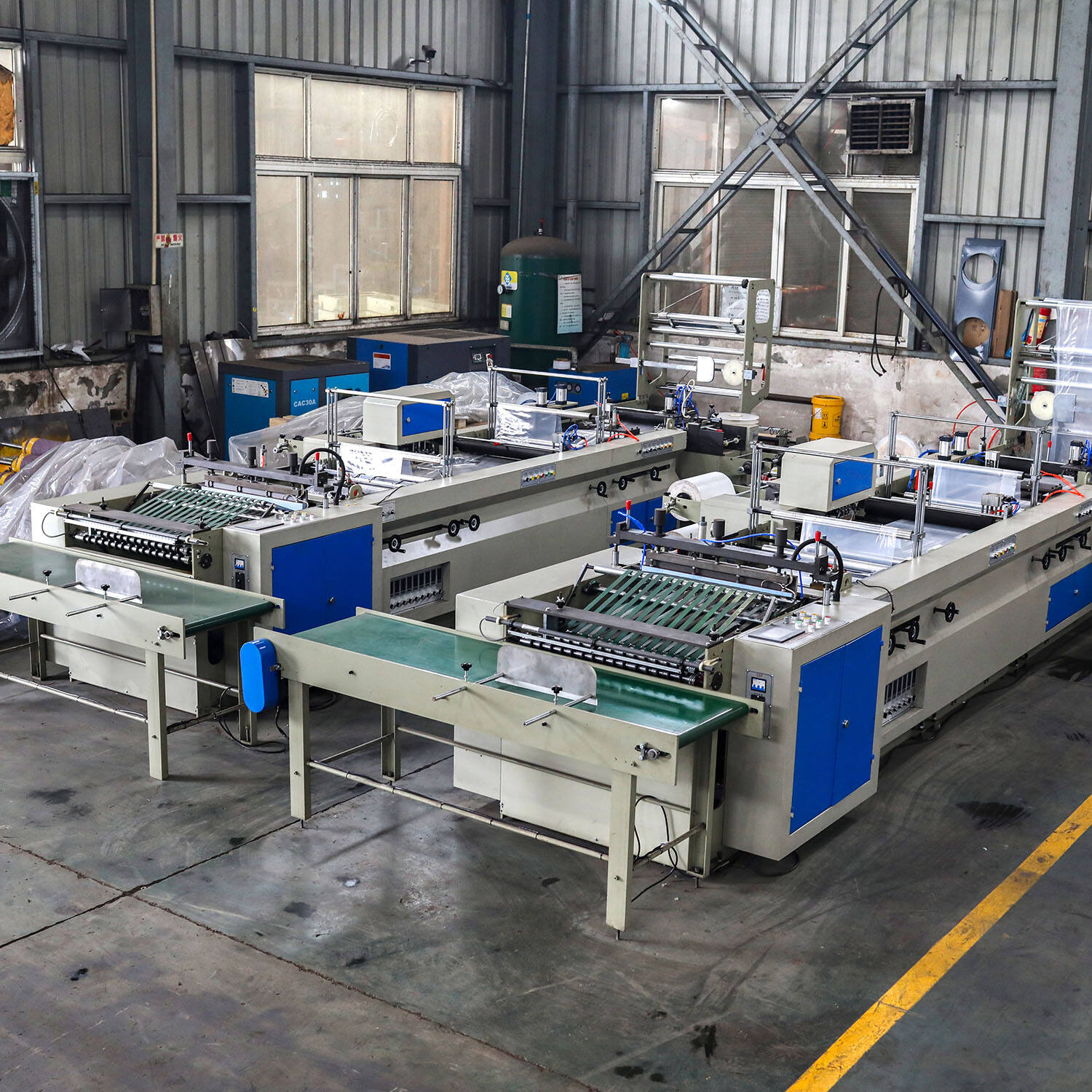
How Automation Ensures Precision and Consistent Bag Quality
Modern plastic bag making machine systems leverage closed-loop automation to achieve unprecedented consistency, eliminating human variability in critical production phases such as sealing, cutting, and printing. This integration of advanced controls ensures every bag meets exact dimensional, aesthetic, and structural standards.
Servo Motor Control for Accurate Sealing and Cutting
The servo driven systems work really well for controlling temperature, pressure levels, and how long things stay pressed together when making those seals. What this means is that every single bag comes out with pretty much the same strong bond throughout. The motors can be controlled separately so they make tiny adjustments to where the cutting blades land on the material. We're talking about precision down to plus or minus 0.1 millimeters here, which helps keep everything lined up properly and stops those annoying edge problems from happening. There are these continuous checks running in the background too. They basically look at each seal as it happens and compare it against what we consider acceptable strength standards. If something doesn't meet those requirements, the system catches it before bad seals get through. Industry reports show that factories using automation waste around 22 percent less plastic film compared to old fashioned manual methods because their processes are so tightly controlled. That number comes from Prakash Offset research back in 2023.
Photoelectric Registration for Perfect Logo and Artwork Alignment
Photoelectric sensors with high resolution spot those registration marks on printed films moving at over 300 meters per minute. The system works pretty smartly actually when something goes off track. A PLC controller jumps in right away to tweak either the printing or cutting position so everything stays aligned within just 0.3 millimeters. For companies worried about brand standards, this kind of accuracy matters a lot especially in industries where rules are tight like pharmaceutical packaging and food containers. We all know what happens if there's a mistake there recall costs go through the roof. According to data from last year's Packaging Automation Report, these advanced sensors cut down wasted materials caused by poor alignment by quite a margin too.
Balancing High-Speed Production with Dimensional Accuracy
| Production Factor | Manual Process | Automated System |
|---|---|---|
| Speed Capacity | 120 bags/min | 400 bags/min |
| Thickness Variation | ±15% | ±5% |
| Length Consistency Tolerance | ±3mm | ±0.5mm |
When it comes to keeping things dimensionally accurate at those high speeds, automated systems really shine thanks to their dynamic tension control capabilities. The system's smart algorithms constantly tweak how fast the film is fed through the machine, which stops problems like stretching out, getting all wrinkled up, or going slack when things speed up. Sensors called load cells work alongside laser micrometers to keep tabs on both thickness and where everything is positioned as it moves along. All this data lets operators calibrate the whole setup while production keeps rolling, no need to stop everything for adjustments. What we see in practice is consistently sized bags with good structural strength throughout long production runs, something that would be impossible to achieve manually at these speeds.
Reducing Material Waste and Human Error in Plastic Bag Production
22% Less Film Scrap: Quantifying Efficiency Gains with Automated Systems
Plastic bag making machines that are automated help cut down on wasted materials because they control how much film gets used during the whole production process. These machines take away all those mistakes people make when measuring things, lining stuff up properly, or adjusting the machinery itself. The result? Bags that come out pretty much exactly the same every time, so there's not as many rejects or bags that don't meet specifications. What makes this work is that these systems have built-in sensors watching over things like how tight the film stays and where everything lines up. If something starts going wrong with the tension or positioning, the machine fixes it right away before any actual bad bags get made.
Automation cuts down on those frustrating trial runs needed whenever we switch from one bag size to another or change up the design completely. This saves a ton of raw materials over time. What's more, operators don't have to tweak things halfway through production anymore, which means fewer quality issues stemming from tired workers or problems at shift handovers. Looking at actual factory data, companies report around 22 percent less polyethylene waste after going automated compared to what they used to get with manual processes. That translates into real savings both on buying new materials and getting rid of all that scrap plastic.
Beyond waste reduction, automation virtually eliminates common defects such as misaligned handles, uneven gussets, and inconsistent sealing—issues that historically accounted for 15–30% of customer rejections. This enhanced reliability allows manufacturers to operate with leaner inventory buffers while meeting stringent quality requirements.
High-Speed Performance Without Sacrificing Quality (Up to 400 Bags/Min)
Real-Time Tension Control for Uniform Thickness and Seal Integrity
Modern bag making machines need to keep quality standards while running at incredible speeds of around 400 bags each minute. They do this through real time tension control systems that keep the plastic film stable during production. The servo motors adjust roller speeds very accurately, which helps create bags with even thickness throughout. Without proper tension control, we would see problems like weak seals that let air escape or edges that get stretched out of shape. These sensors check how tight the material is being pulled as many as 200 times every single second. When they detect something off track, they can quickly tweak where rollers are positioned or how fast materials feed into the machine. For food packaging applications, these adjustments matter a lot because any leak could ruin products inside. Retail stores also care deeply about this since customers expect their shopping bags to stack neatly on shelves without looking warped or damaged.
Case Study: Beverage Distributor Reaches 99.8% First-Pass Yield After Automation
One big name in beverage packaging solved their ongoing production issues when they brought in an automated plastic bag maker that churns out around 400 bags every minute. Before this upgrade, all those manual operations kept causing alignment problems and bad seals whenever they tried running at full capacity, which meant throwing away about 12% of what they made. Once they installed systems with light sensors for registration and tension controls that adjust themselves, things changed dramatically. The first time through the process now gets them almost 99.8% good products, and they're wasting 22% less film material than before. What really stands out is how the monitoring system spots problems with the gussets forming properly and fixes them on its own without needing anyone to stop the whole line. Looking at this example shows just how much better manufacturing can get when companies invest in precise automation technology. Not only do they produce way more goods, but they also end up with practically no defects and save resources across the board.
Frequently Asked Questions
What is the main advantage of using automation in plastic bag production?
Automation in plastic bag production ensures precision, consistent quality, and reduction in material waste and human error by controlling critical phases like sealing, cutting, and printing.
How does the servo motor control contribute to the production process?
Servo motor control helps manage temperature, pressure, and positioning in sealing and cutting, ensuring accurate seals and cuts within precision tolerances of up to 0.1 millimeters.
What role do photoelectric sensors play in this automation process?
Photoelectric sensors detect registration marks on printed films to maintain perfect logo and artwork alignment, important for industries with stringent brand standards.
How does automation affect material waste?
Automation reduces material waste by minimizing errors and trial runs during bag size and design changes, leading to less scrap plastic and better resource utilization.
Can automation lead to cost savings?
Yes, automation saves costs by reducing polyethylene waste, minimizing defects, and allowing manufacturers to operate with leaner inventory buffers while meeting quality standards.