 EN
EN
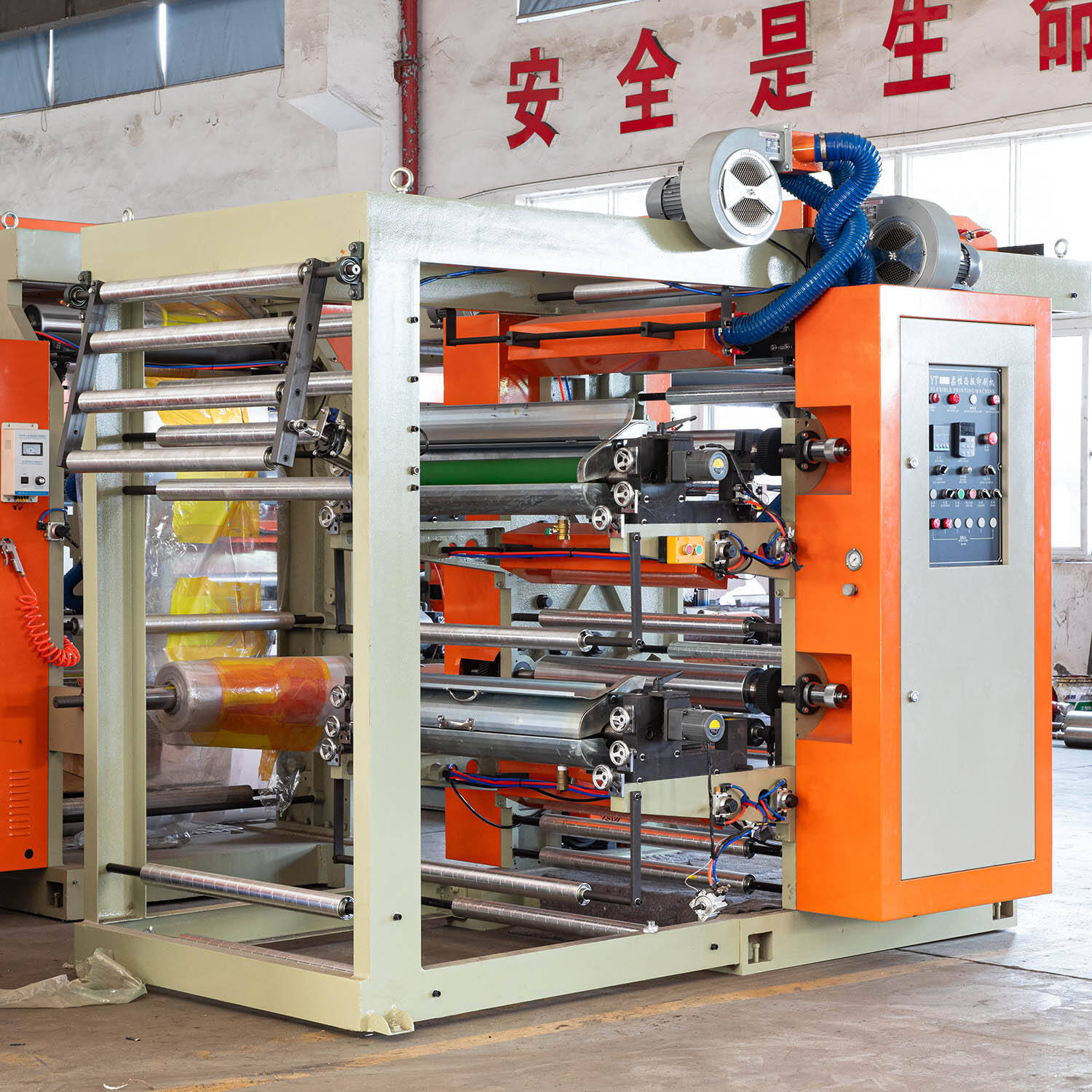
Why Flexo Printing Machines Dominate Large-Format Packaging Production
Speed, Consistency, and Wide-Web Efficiency at Scale
Flexo printing machines can crank out production speeds well above 600 feet per minute while still keeping print quality steady during those massive volume runs that big package manufacturers need. These machines work with web widths going beyond three meters, which means companies get better material use and cut down on waste by about 20% when compared to narrower web options. The automated plate mounting system makes setup faster, and the color control works continuously to keep colors accurate and aligned properly, even when running at full speed. Brands often integrate laminating, coating, and various finishing touches right into the main production line instead of doing them separately later on. This saves time and keeps branding elements looking consistent across all products. Food packaging and consumer goods companies especially rely on flexo tech because they need quick turnarounds, crisp images, and prints that last through long production runs without fading or smudging.
Market Demand: CAGR 5.2% Growth Driven by E-Commerce and Sustainable Packaging
Industry forecasts suggest the flexo printing machine market will expand at around 5.2 percent annually between now and 2028. This growth stems mainly from two factors: the booming e-commerce sector and increasingly strict environmental regulations. Retailers online are responsible for about 30% of all new flexo press purchases these days. They need packaging that can handle massive volumes while surviving rough shipping conditions and still looking good on store shelves. Flexo printing has another big advantage too. It works really well with green materials like recycled cardboard boxes, biodegradable plastic films, and those special water-based or UV curing inks that don't harm the environment. This makes flexo a top choice when companies want to meet government standards and participate in circular economy programs. With lightweight packaging becoming more popular, especially single material designs that are easier to recycle, flexo continues to prove itself adaptable enough to keep up with changing material needs. For businesses trying to produce large quantities quickly while staying environmentally responsible, this flexibility remains crucial.
Key Configurations of Modern Flexo Printing Machines for Large-Format Substrates
Central Impression (CI), Stack, and In-Line Presses: Performance Trade-Offs for Corrugated & Flexible Films
Modern large format flexo printing basically comes down to three main setups: Central Impression (CI) machines, stack presses, and in line systems. Each has its own sweet spot depending on what kind of materials are being printed and what matters most in production. CI presses stand out because they can hit registration accuracy within about 0.1mm and run at blistering speeds up to 1500 feet per minute. That's why many manufacturers turn to them when producing flexible films in volume, since packaging experts report that registration issues cause around 78% of all print problems according to Packaging Digest last year. Stack presses give printers more flexibility when working with different substrates across multiple jobs, although they don't match the pinpoint accuracy or speed of CI models. And then there are in line systems which really shine with rigid corrugated boards. These systems work great with die cutting operations right from the start, but companies need to plan for extra space in their facilities because these machines take up quite a bit of room.
| Configuration | Speed | Registration Accuracy | Substrate Versatility | Footprint |
|---|---|---|---|---|
| Central Impression | High | High | Medium | Compact |
| Stack Press | Medium | Medium | High | Modular |
| In-Line | Medium | Medium | Low | Extensive |
In CI printing setups, there's usually just one impression cylinder which helps cut down on vibrations and keeps everything registered properly when running at top speed. Stack arrangements give each color station its own adjustments, making them great for jobs with different materials mixed together. Meanwhile, inline systems are all about getting maximum output from corrugated board processing. Choosing the right setup really depends on what kind of materials will be printed, how much volume needs to get through, and whether there are special requirements after the press work is done. There's no universal answer here that works for everyone across the board.
Substrate Versatility: Optimizing the Flexo Printing Machine for Multi-Material Runs
Handling Corrugated Board, Laminated Films, and Foil-Coated Substrates in One Setup
Today's flexo printing equipment handles all sorts of different materials without needing constant mechanical adjustments. Think about things like porous corrugated cardboard, sensitive laminated films that react to heat, or those tricky non-absorbent foil coated surfaces. How do these machines manage it? Well, they rely on smart tension systems, interchangeable print modules, plus drying areas that adapt as needed. What happens when switching between materials? The transition becomes much smoother, reducing waste during changeovers by around 30%. Registration stays pretty tight too, within about half a millimeter. For companies dealing with lots of different material combinations in their production runs, this kind of flexibility means jobs get done quicker, there's less wasted product lying around, and overall equipment usage improves significantly across the board.
Anilox Roll Selection and UV/EB Ink Systems for Consistent Large-Format Print Quality
Getting consistent ink transfer across different materials depends heavily on picking the right anilox rolls. The cell structure and volume capacity need to match what the material can handle, usually somewhere between 3 and 18 BCM depending on how porous or energy rich the surface is. When combined with UV or electron beam curing systems, this setup helps prevent those annoying dots from spreading out too much on paper-like materials while still sticking properly to plastic surfaces. Monitoring viscosity as things run through the press makes a big difference too. Most shops aim for Delta E readings below 1.5 over entire 50 meter print runs because that level of color accuracy matters a lot when brands are printing their logos on big boxes or displays.
End-to-End Integration: How Flexo Printing Machines Enable Seamless Post-Press Converting
Inline Die-Cutting, Slitting, and Gluing Capabilities for High-Speed Packaging Lines
Today's flexo printing equipment has evolved beyond simple printing functions to become comprehensive production systems that incorporate everything from die cutting to slitting and gluing right within the main press unit. The one pass through process cuts down on manual handling steps, which means production cycles can be shortened by around 40% and labor expenses drop roughly 30%. With synchronized tension controls and automatic setup changes between jobs, these machines keep printed materials aligned properly even at impressive speeds exceeding 300 meters per minute when working with materials ranging from standard cardboard to thin plastic films used in packaging. Getting rid of those extra storage areas during processing helps prevent material warping, so finished products like display boxes, pouches that stand upright, and all sorts of online order packaging retain their shape and quality. As manufacturers race against tighter deadlines, push for greener operations, and deal with unpredictable supply chains, this kind of integrated approach transforms flexo printing from merely another step in manufacturing into something much more valuable across entire production lines.
FAQ
What makes flexo printing machines ideal for large-format packaging?
Flexo printing machines excel in large-format packaging due to their high-speed capabilities, precise color control, and ability to integrate lamination, coating, and finishing in-line. They use wide web widths that improve material efficiency and reduce waste.
How does the flexo printing industry plan to keep growing at 5.2% CAGR?
The industry is expected to grow by 5.2% CAGR due to increased e-commerce demand and a shift towards sustainable packaging using environmentally friendly materials, such as recycled cardboard, biodegradable films, and UV curing inks.
What are the main configurations of modern flexo printing machines?
The three main configurations are Central Impression (CI) machines, stack presses, and in-line systems. Each configuration has advantages in speed, accuracy, and substrate handling.
Can flexo printing machines handle multiple substrates?
Yes, modern flexo machines can efficiently print on a diverse range of substrates, including corrugated board, laminated films, and foil-coated surfaces, thanks to smart tension systems and interchangeable print modules.
How do flexo printing machines support sustainable packaging initiatives?
Flexo printing machines are well-suited for sustainable packaging due to their compatibility with green materials and inks, reducing waste, and supporting single-material designs that are easier to recycle.
Table of Contents
- Why Flexo Printing Machines Dominate Large-Format Packaging Production
- Key Configurations of Modern Flexo Printing Machines for Large-Format Substrates
- Substrate Versatility: Optimizing the Flexo Printing Machine for Multi-Material Runs
- End-to-End Integration: How Flexo Printing Machines Enable Seamless Post-Press Converting
-
FAQ
- What makes flexo printing machines ideal for large-format packaging?
- How does the flexo printing industry plan to keep growing at 5.2% CAGR?
- What are the main configurations of modern flexo printing machines?
- Can flexo printing machines handle multiple substrates?
- How do flexo printing machines support sustainable packaging initiatives?