
 EN
EN
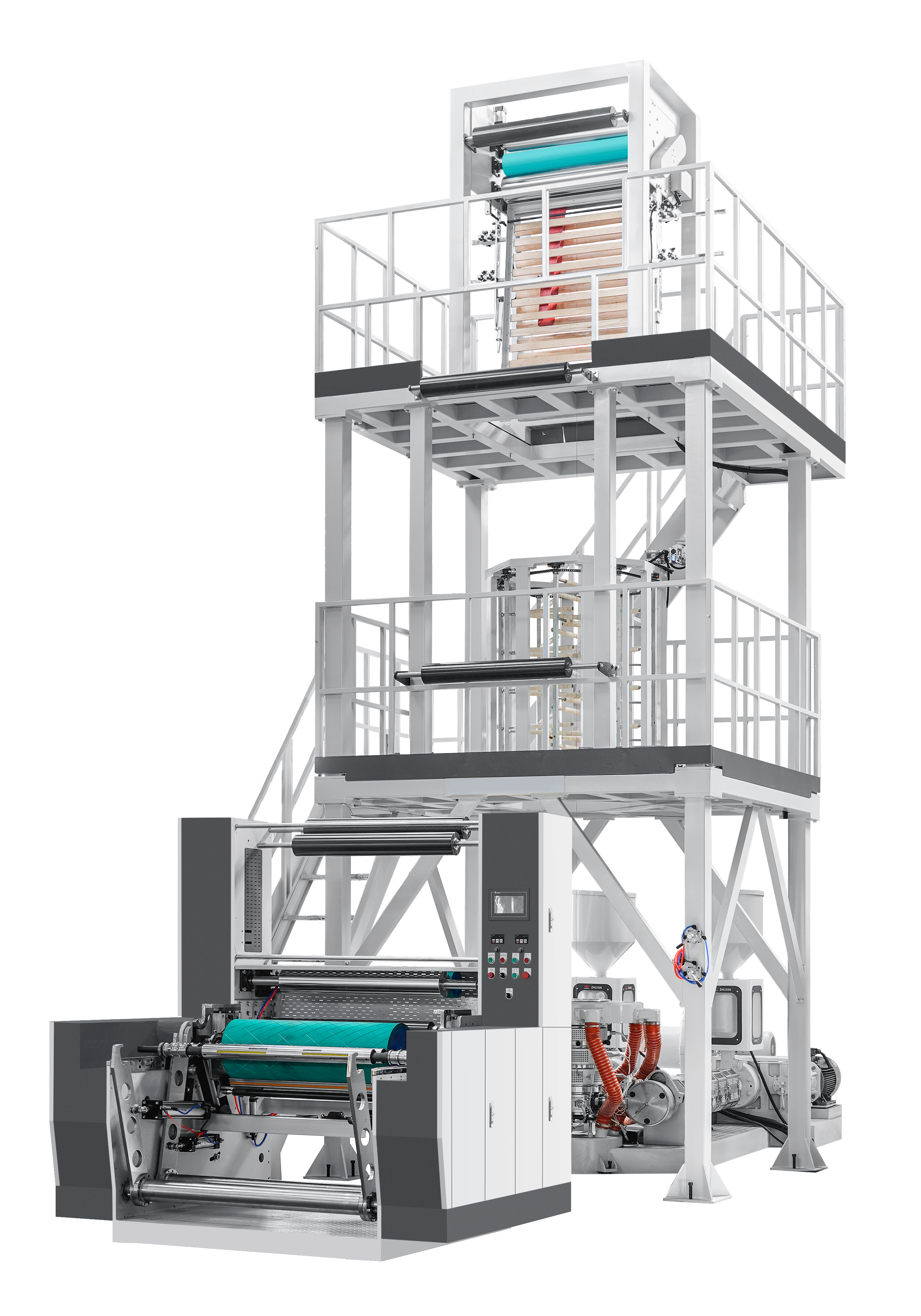
Core Film Blowing Machine Components Enabling Precision Micro-Perforation
Annular die with micro-adjustable air ring for stable bubble initiation and uniform wall thickness
In micro-perforated film manufacturing, the annular die plays a fundamental role in achieving precision. What makes it so effective is the micro-adjustable air ring feature that lets operators tweak airflow distribution with about a 2% margin of error. This helps create stable bubbles without defects right from the start. Maintaining wall thickness within roughly 1.5% tolerance becomes possible thanks to this control, which is actually pretty important for keeping things structurally sound once those tiny holes get added later on. When thickness varies beyond 3%, problems pop up with how evenly the perforations spread out across the material, and this can really hurt the barrier properties. Fortunately, the precision built into these dies catches potential issues early before they become bigger headaches down the line.
Integrated bubble cage, IBC cooling, and frost line control to stabilize film structure pre-perforation
Stabilizing processes downstream depends on three main systems working together. First, there's the bubble cage which actually stops those annoying oscillations from happening. Then we have this thing called Internal Bubble Cooling (IBC) that keeps track of temperature changes across different areas really well. And finally, there's an automatic system controlling how high the frost line gets, making sure everything crystallizes properly. The whole setup includes real time heat checks too because if things cool down too fast, materials become brittle instead of strong. This matters a lot when making tiny holes since after processing needs to maintain at least around 80-90% tensile strength. All these components work hand in hand to maintain proper molecular alignment and surface tension characteristics needed for consistent hole creation without defects.
Bubble Stability Optimization During Micro-Perforated Film Production
Achieving consistent bubble stability is non-negotiable in micro-perforated film production: even minor fluctuations distort hole geometry and compromise mechanical integrity. The film blowing machine must maintain tight coordination across interdependent process variables during this sensitive phase.
Balancing inflation and draw ratios to maintain tensile integrity amid micro-hole patterning
Getting the right balance between inflation and draw ratios is really important for good results. If there's too much inflation, the film gets too thin too soon and starts tearing around those tiny holes we create. On the flip side, not enough expansion leads to all sorts of problems with how the polymer spreads throughout the material. Most experienced manufacturers stick to a draw ratio somewhere between 1:2.5 and 1:3.5 because it keeps the material strong enough while still allowing us to make those dense patterns with thousands of holes per square centimeter. The numbers aren't just random either. Looking at what other companies have found works best, sticking within this range cuts down on defects by about 40% when compared to setups where nobody pays attention to these parameters. That kind of improvement makes a real difference in production quality over time.
Real-time extrusion speed and airflow synchronization to suppress oscillation during perforation
Advanced servo-driven systems adjust extrusion output with ±0.8% accuracy in response to bubble diameter sensors. Simultaneously, proportional IBC valves modulate internal airflow to counteract resonance effects. This dual-loop synchronization dampens harmonic oscillations by 70% within 0.5-second response windows—preventing perforation needle misalignment and ensuring geometric fidelity of micro-holes.
Precision Thickness and Width Control for Consistent Micro-Perforated Output
Laser-based in-line thickness monitoring and automated die lip adjustment (±1.5% tolerance)
Getting uniform thickness right matters a lot for quality control. Laser sensors are constantly scanning around the bubble every third of a second, picking up even tiny changes down to 0.1 microns in size. All these measurements feed into what's called a closed loop system. The system then tells those servo driven die lip adjusters exactly where they need to move to fix any problems. Thickness stays pretty much spot on within plus or minus 1.5 percent most of the time. For the edges, we've got trimming systems equipped with laser guided slitters that keep everything straight across the width with an accuracy of about 0.2 millimeters either way. Having both these controls working together stops those weak areas from forming that would tear easily when we go through the perforation process. Plus it makes sure all the holes are the same depth so air can pass through properly while still keeping whatever needs containing inside safe. And let's not forget the bottom line benefit too. When everything gets adjusted automatically instead of relying on someone manually making corrections, we actually save around 12 percent of materials compared to doing things by hand.
Integration of Micro-Perforation Systems with the Film Blowing Machine Workflow
Getting all these components to work together smoothly needs a single control system that ties everything together. The central PLC handles several key functions at once including controlling how fast the material is extruded, managing the IBC cooling process, maintaining proper web tension, and timing the perforations so they don't get out of sync which would lead to irregular holes in the final product. When the system detects changes in thickness through real time monitoring, it automatically adjusts either the laser power or how deep the needles go into the material. This keeps hole sizes within a tight range of plus or minus 3% even when raw materials vary slightly from batch to batch. According to industry standards on extrusion efficiency, this kind of automated feedback loop reduces tiny defects by around 40% compared to older standalone systems. Communication between different parts of the machinery has gotten much better too thanks to standard protocols like OPC UA. These allow older machines to talk to newer perforation units without needing expensive replacements. An important point worth mentioning is that we do the actual perforating while the bubble is still stable rather than waiting until after winding. This simple change alone cuts down on film damage caused by handling by about 30%. And because everything happens in such coordinated fashion, manufacturers can rest assured their products meet the latest ISO 5636-5:2023 requirements for air permeability needed in both medical and food packaging applications.
FAQ
What is the role of an annular die in micro-perforated film manufacturing?
An annular die with a micro-adjustable air ring is crucial in micro-perforated film manufacturing for stable bubble initiation and uniform wall thickness. It helps maintain the structural integrity of the film before perforations are added.
How does Internal Bubble Cooling (IBC) benefit the manufacturing process?
IBC enhances the film manufacturing process by stabilizing temperature changes, preventing material brittleness, and ensuring proper molecular alignment and surface tension needed for consistent hole creation.
Why is balancing inflation and draw ratios important in film production?
Balancing these ratios is critical for maintaining tensile integrity. Proper balance prevents the film from becoming too thin or creating polymer distribution issues, which are essential for forming uniform micro-hole patterns.
How do laser-based monitoring systems improve film quality?
Laser-based systems provide real-time thickness and width monitoring, enabling immediate adjustments to prevent defects. This automation ensures consistent product quality and reduces material waste.
Table of Contents
- Core Film Blowing Machine Components Enabling Precision Micro-Perforation
- Bubble Stability Optimization During Micro-Perforated Film Production
- Precision Thickness and Width Control for Consistent Micro-Perforated Output
- Integration of Micro-Perforation Systems with the Film Blowing Machine Workflow
- FAQ